House bill · 119th Congress
Stopping Fraudulent Payments ActH.R. 8464
Introduced by
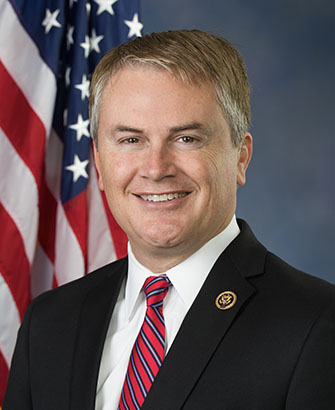
- Introduced
- April 23, 2026
- Started in
- House
- Topic
- Government Operations and Politics
- Cosponsors
- 2
- Latest action
- June 11, 2026: Received in the Senate.
What the bill does
Summary written by the Congressional Research Service, Congress's nonpartisan research office, for the version marked "Reported to House" (June 3, 2026).
Stopping Fraudulent Payments Act
This bill establishes requirements to prevent fraudulent or improper payments from federal programs.
Specifically, the bill directs executive agencies to take corrective actions to temporarily pause, condition, or segment payment voucher requests before certifying them if the agencies have sufficient reason to determine that the payments present elevated risks of fraud or improper payments resulting in financial loss to the government. The corrective actions must be (1) based on objective, documented fraud-risk indicators; (2) narrowly applied to the portion of the payments presenting the elevated risk; and (3) limited in duration to the minimum period necessary to verify the eligibility or accuracy of the payments.
The Department of the Treasury must return certified payment vouchers to agencies for corrective action if they present an elevated risk of fraud based on an output of Treasury’s Do Not Pay system.
The bill also prohibits officers or employees of the federal government from being personally liable for actions taken in good faith under this bill.
Recorded votes on this bill
Every roll-call vote taken on it, newest first. Each links to the official record of how every member voted.
| Date | Chamber | What was voted on | Outcome |
|---|---|---|---|
| June 10, 2026 | House | On Motion to Recommit | Failed 209 yes, 213 no Official record |
| June 10, 2026 | House | On Passage | Passed 218 yes, 200 no Official record |
Source: Voteview (UCLA), compiled from House Clerk and Senate roll-call records (retrieved November 21, 2026); U.S. Senate (retrieved November 21, 2026).
Cosponsors (2)
Members who signed on to support the bill, with the date each signed on.
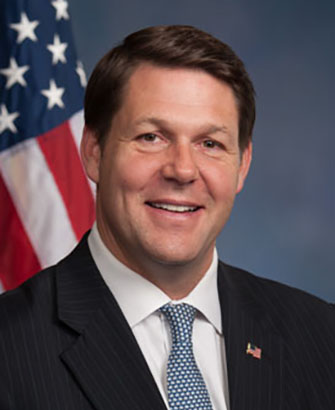
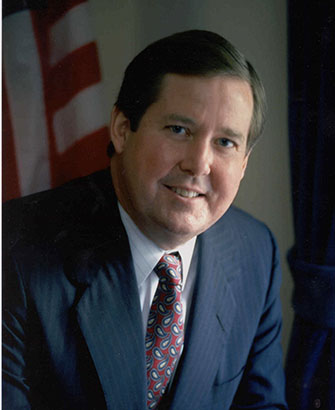
Every step it has taken
Each action recorded on the bill, newest first.
- June 11, 2026 · Received in the Senate.
- June 10, 2026 · Motion to reconsider laid on the table Agreed to without objection.
- June 10, 2026 · On passage Passed by the Yeas and Nays: 218 - 200 (Roll no. 220). (text of amendment in the nature of a substitute: CR H4071-4073)
- June 10, 2026 · Passed/agreed to in House: On passage Passed by the Yeas and Nays: 218 - 200 (Roll no. 220). (text of amendment in the nature of a substitute: CR H4071-4073)
- June 10, 2026 · On motion to recommit Failed by the Yeas and Nays: 209 - 213 (Roll no. 219).
- June 10, 2026 · Considered as unfinished business. (consideration: CR H4078-4079)
- June 10, 2026 · POSTPONED PROCEEDINGS - At the conclusion of debate on H.R. 8464, the Chair put the question on motion to recommit and by voice vote, announced the ayes had prevailed. Mr. Comer demanded the yeas and nays and the Chair postponed further proceedings until a time to be announced.
- June 10, 2026 · The previous question on the motion to recommit was ordered pursuant to clause 2(b) of rule XIX.
Show all 20 steps
- June 10, 2026 · Mr. McGarvey moved to recommit to the Committee on Oversight and Government Reform. (text: CR H4075)
- June 10, 2026 · The previous question was ordered pursuant to the rule.
- June 10, 2026 · DEBATE - The House proceeded with one hour of debate on H.R. 8464.
- June 10, 2026 · Rule provides for consideration of H.R. 8312, H.R. 8464, H. Res. 1335 and S. 2. The resolution provides for consideration of H.R. 8312, H.R. 8464, H. Res. 1335, and S. 2 under a closed rule with one hour of general debate on each measure. The resolution provides for a motion to recommit H.R. 8312 and H.R. 8464 and a motion to commit S. 2.
- June 10, 2026 · Considered under the provisions of rule H. Res. 1345. (consideration: CR H4071-4075)
- June 8, 2026 · Rules Committee Resolution H. Res. 1345 Reported to House. Rule provides for consideration of H.R. 8312, H.R. 8464, H. Res. 1335 and S. 2. The resolution provides for consideration of H.R. 8312, H.R. 8464, H. Res. 1335, and S. 2 under a closed rule with one hour of general debate on each measure. The resolution provides for a motion to recommit H.R. 8312 and H.R. 8464 and a motion to commit S. 2.
- June 3, 2026 · Placed on the Union Calendar, Calendar No. 597.
- June 3, 2026 · Reported (Amended) by the Committee on Oversight and Government Reform. H. Rept. 119-684.
- April 29, 2026 · Ordered to be Reported (Amended) by the Yeas and Nays: 23 - 17.
- April 29, 2026 · Committee Consideration and Mark-up Session Held
- April 23, 2026 · Referred to the House Committee on Oversight and Government Reform.
- April 23, 2026 · Introduced in House
Read the bill
- Engrossed in House · June 10, 2026
- Reported in House · June 3, 2026
- Introduced in House · April 23, 2026
Full text on GovInfo, the government's official publisher.
What it would cost
- H.R. 8464, Stopping Fraudulent Payments ActAs reported by the House Committee on Oversight and Government Reform on June 3, 2026 · June 8, 2026
Estimates by the Congressional Budget Office.
Source: U.S. Government Publishing Office (GovInfo), from the Library of Congress bill status record (retrieved November 22, 2026). Read live from GovInfo's bill status record, the same record behind Congress.gov, the moment this page is opened.